


LMC AT A GLANCE
ESTABLISHED
1984
TEAM
LMC team members have expertise in chemisty, biochemistry, physics, mathematics and software development
RESEARCH
- Molecular modeling
- Environmental fate and ecotoxicity
- Human health hazard
- Metabolism
COLLABORATION
LMC has active collaboration with chemical industry and government agencies. LMC participated in the Phase I and II of the development of QSAR Toolbox, part of the OECD QSAR project.
News
[18.03.2026]
QSAR TOOLBOX VIRTUAL TRAININGS BY THE DEVELOPERS
Basic: September 24-25, 2026
Advanced: September 28 - October 01, 2026
For more information, see here
[28.07.2025]
New OASIS software versions released!
See what`s new in TIMES and CATALOGIC
[18.07.2025]
New version of QSAR Toolbox - v.4.8 available for download
[12.07.2024]
New versions of TIMES and CATALOGIC released
[2024]
LMC celebrates its 40th anniversary, see here
[05-09.06.2023]
LMC participation in QSAR2023. See more HERE.
[16.05.2023]
New versions of TIMES and CATALOGIC released
[16.05.2023]
QSAR Toolbox 4.6 released
Download it here.
[01-04.05.2023]
LMC participation in SETAC2023. See more HERE.
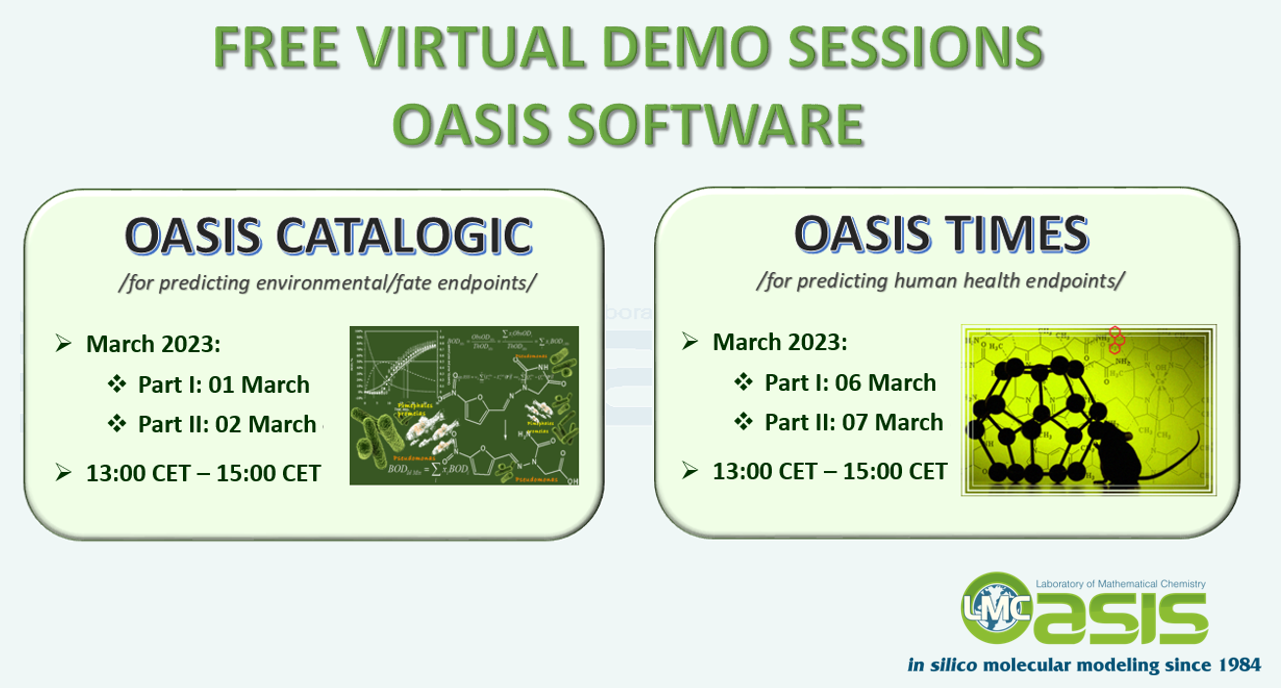
[04.01.2023]
[08.01.2021]
OncoLogic v.9 released