QSAR Toolbox: Training

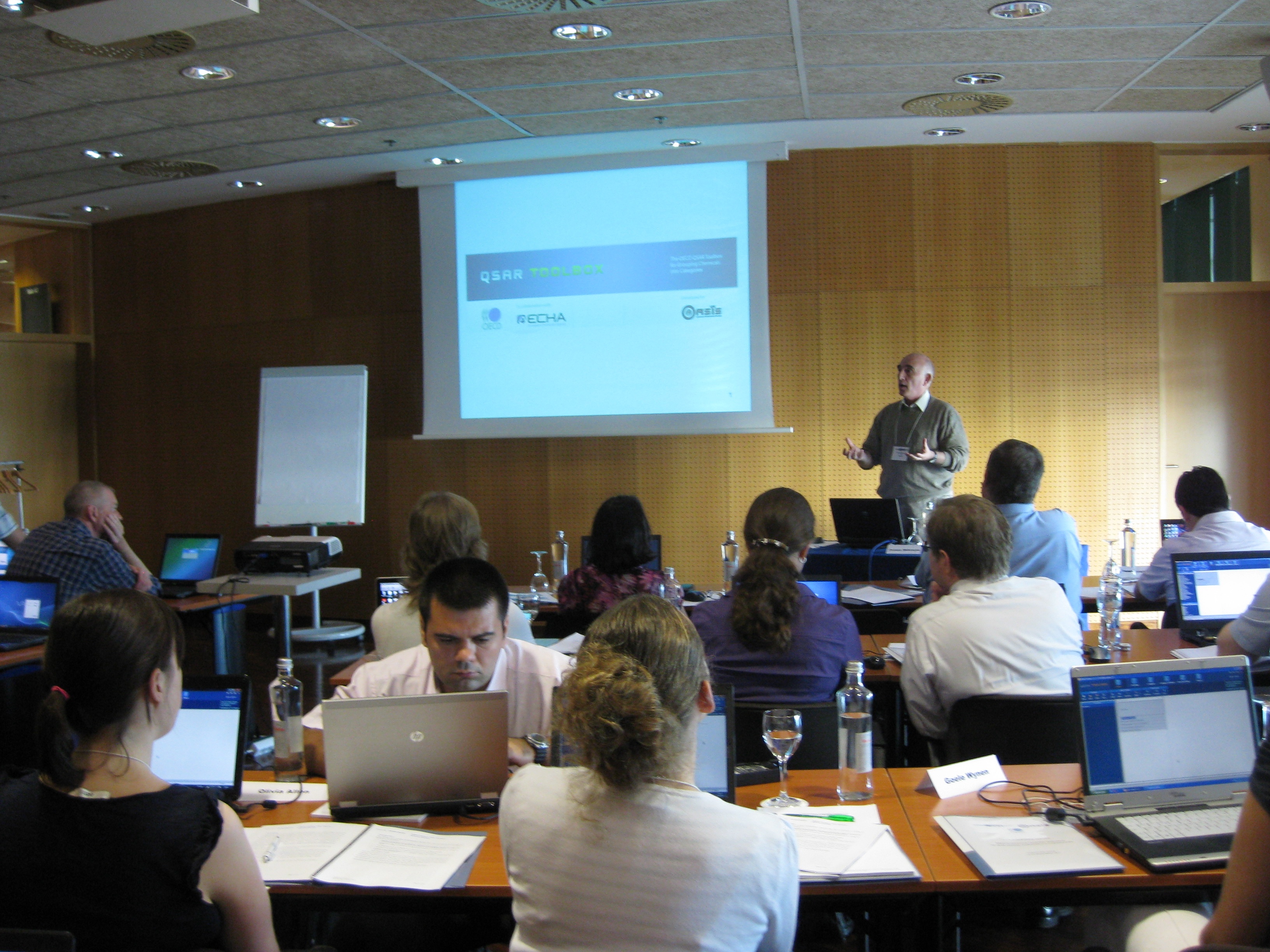
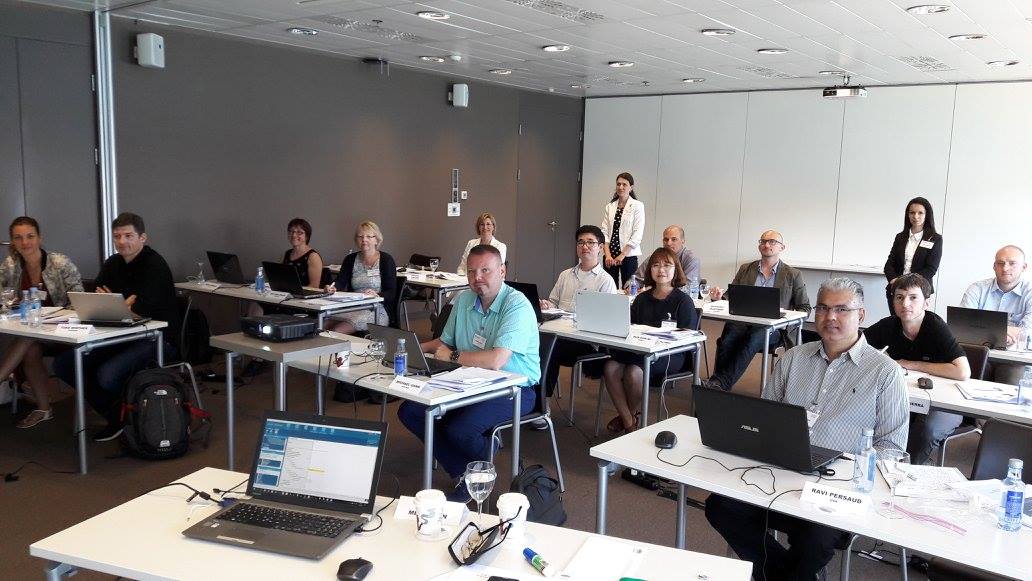
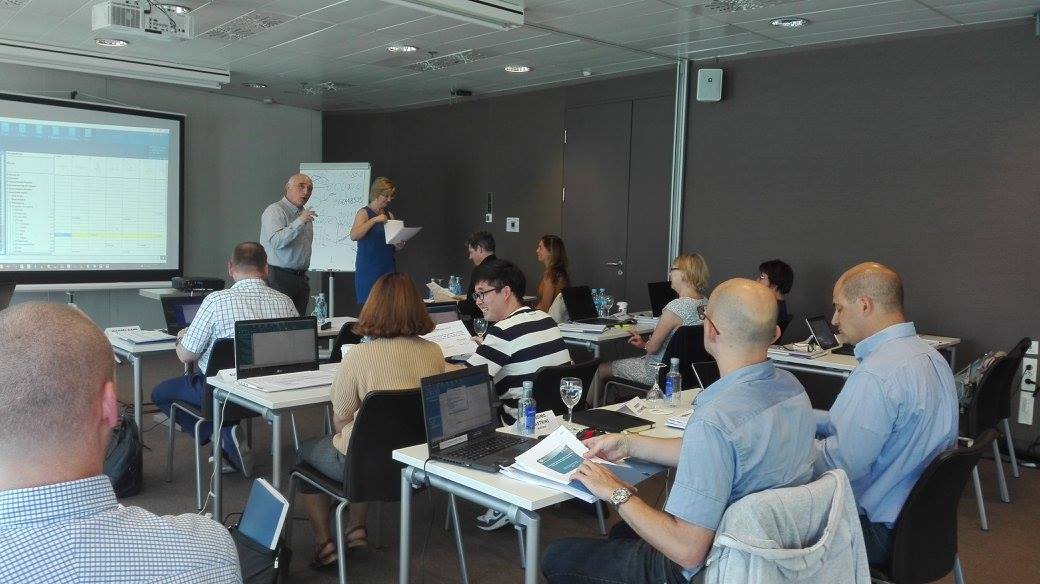
Train with us and you will fully benefit from the opportunity to learn directly from the developers of the system. This exclusive training gives you a unique opportunity to gain first-hand knowledge and practical insights. Get answers to all your questions about using Toolbox, and develop a deep understanding of every functionality and option within the system. Discover tips, best practices, and hidden functionalities that will help you work more efficiently and confidently.
We understand the rationale underlying the hazard assessment of chemicals, allowing us to convey that knowledge in a way that motivates and inspires you. Our team comprises highly knowledgeable tutors specializing in various scientific disciplines, dedicated to imparting the essential knowledge and skills you require.
Enhance your expertise in chemical assessment with our comprehensive, hands-on training designed for professionals working in toxicology, environmental science, and regulatory compliance.

Build a strong foundation in QSAR Toolbox and confidently navigate its key modules and functionalities. Learn how to create and refine chemical categories, apply advanced profiling techniques, and interpret results with ease.
Develop practical skills in data collection, category formation, and data gap filling, while generating and understanding predictions for ecotoxicological, environmental fate, and human health endpoints.
Explore how to evaluate the performance of mechanistic alerts, learn more about empirical structural similarity, and become familiar with metabolism data for smarter assessments.
Discover how to apply automated workflows, analyze and filter data efficiently, and make the most of QSAR Toolbox reports—equipping you with the tools needed for confident, regulatory-relevant decision-making.
This hands-on training is designed to help you confidently import and work with custom data, knowledge, and external sources of information (such as QSAR models). You’ll learn how to perform advanced searches for chemicals, datasets, impurities, and metabolite precursors, and discover how to correlate multiple endpoints with ease.
Gain practical skills in preparing high-quality reports for regulatory submissions and effectively handling complex mixtures. Plus, explore the capabilities of the WebClient to streamline your workflow and enhance your analysis.
Take your expertise to the next level with tools and techniques you can apply immediately!
This advanced training focuses on simulated and observed metabolism data within QSAR Toolbox, with practical applications through different case studies. Learn how to evaluate the predictability of alerts driven by metabolic activation and ensure category consistency in your assessments.
You’ll also gain hands-on experience in preparing reports aligned with Read-Across Assessment Framework (RAAF) requirements, giving you the confidence to meet regulatory expectations. A key highlight of the course is mastering the prediction of higher-tier endpoints and building strong, science-based weight-of-evidence approaches.
Elevate your analysis skills and make more informed, defensible decisions with Advanced Toolbox – Part 2.
Training by the developers
Training with us, you are training with the very best because we are the developers of QSAR Toolbox.
When you train with us, you get the full benefit to learn from the creators of the system. There are no questions without answers. We know what an assessment will look for - so we train you to meet it. We know the thinking behind the hazard assessment of chemicals - so we can convey that to drive and inspire you. We have a team of expert tutors working across the science and they will transfer the knowledge and skills you need.
After this course
Our team of tutors has vast amounts of training and assessment experience, and knows best the functionalities of the Toolbox. After this course, you will be able to interact with the system by asking questions, interpreting its answers, creating new knowledge and justifying your solutions based on its functionalities.
You will become expert in:
Input: including input of a target chemical, quality analysis of chemical structures, intelligent search in inventories and databases;
Profiling: including understanding what you could expect from your chemical, its chemical mechanism of interaction, its physiological mode of action, how to computerize your own knowledge and disseminate it with your colleagues
Data: including how to collect data from public databases, units and scale conversion, create your own custom database and share it with your colleagues, exchange data with IUCLID6
Category definition: including building a category of similar chemicals, search for "strange" analogous, filtering by test conditions
Data Gap Filling: how and when to use read across, trend analysis, and QSAR, smart sub-categorization, outliers justification, meaning and interpretation of numbers
Report: including building standard reports supported by OECD and ECHA, user-defined or edited reports, prepared according to the RAAF principles.
And more: "unlocking" of ECHA REACH database in Toolbox, installation of external modules (QSAR models, profilers, etc.)
You will be able to address critical questions related to:
Alert performance: What is Alert performance? How the Alert performance could be of help in searching of analogues? How to define a category taking into account the performance of alerts identified after metabolic activation?
Metabolism: How to simulate the (a)biotic metabolites of your target chemical(s)? How to use the metabolic information for searching of analogues? How to identify a positive metabolite? How to use data of a metabolite to predict the parent (i.e. target chemical)? How to search for precursors of target chemical (i.e. chemicals, which as a result of metabolism produce your target chemical as a metabolite)?
Higher tier endpoints: How to predict higher tier endpoints when structurally similar analogues are available and what we could do when analogues are not available?
IUCLID search: How to import/export information from/to IUCLID? How to search in the substance composition or for specific data in IUCLID databases?
RAAF: What is RAAF? How to build a report in accordance with RAAF? What type of information you could use for building a RAAF report?
and many other questions important for you.
Training courses
As developers of OECD QSAR Toolbox, we know that the duration of the training sessions should be enough, given the complexity of the system and increasing number of available functionalities. The timeframes of the trainings are compliant with the mandatory items that should be covered, diversity of issues and case studies that will be addressed and different time zones of the participants. Based on our experience, trainings with shorter duration would underestimate the usefulness of OECD QSAR Toolbox.
Online training
If you want to become familiar with the basic functionalities of OECD QSAR Toolbox or to become a proficient user using the advanced functionalities of the system, while staying at home, then the Virtual Training is the most convenient and cost-effective to you (or your organization). You have the opportunity for a greater flexibility, effective time management in the comfort of your home/office.
Two level training courses are available*:
- Basic (agenda) - two subsequent days
- Advanced (agenda) - four subsequent days but splitted into two parts to better accommodate participants who may not be able to attend the entire session at once
The training sessions take 5 hours per day trying to facilitate participation from different time zones.
The next virtual trainings are scheduled for:
Autumn 2026:
- Basic training: 24-25 September, 2026
- Advanced training:
PART I - 28-29 September, 2026
PART II - 30 September - 01 October, 2026
All attendees will receive a course completion certificate.
*NOTES:
- BASIC COURSE IS A PREREQUISITE TO REGISTER FOR ADVANCED COURSE
- THE NUMBER OF PARTICIPANTS IN EACH OF THE TRAINING COURCES IS LIMITED BETWEEN SIX TO TWENTY.
*NOTE: BASIC COURSE IS A PREREQUISITE TO REGISTER FOR ADVANCED COURSE.
How to attend the training
The training courses (virtual and hands-on) are organized by REACH Monitor and the International QSAR foundation.
For registration and more details about the training courses (virtual or regular annual courses), please see the information available at REACH Monitor .
What our trainees say
"...The instructors demonstrated exceptional expertise and provided clear, invaluable insights throughout the course. I have gained a wealth of knowledge and am eager to apply these new skills to my work.
I would highly recommend this live, virtual training course to anyone interested in applying/learning more about chemical grouping and toxicological read across using the Toolbox.
A big thank you to REACH monitor and the LMC team for this invaluable opportunity!"
"…the course was completely fine and nothing actually needed to be done to make the training more efficient ..."
"…the "real-life" example presented there was crucial. Understanding the "concept" behind, made it much easier to attend the QSAR toolbox training …"
"… things that were liked during the training were the scientific background of the training, the repetition of some complex tasks to routinise them and the interaction and opportunity to ask and discuss during the course …"
"…the new concept of a "hands-on" training provided practical and interesting examples and explanations and the software demo made sure that everybody was following each step of the trainer's explanations. This also gave the participants an opportunity to a repetition of going through the different steps of the Toolbox. According to the participants, the worthy examples provided were extremely useful for gaining a worthy knowledge of Toolbox and also the number of examples provided was very good …"
QSAR Toolbox
Training Sessions